
Red Light Therapy at MitoPulse
Restore Your Energy.
Support Deep Cellular Repair.

Red Light Therapy
At MitoPulse, we use Red Light Therapy to support healthy mitochondrial function, helping cells produce the cellular energy needed for repair, recovery, and everyday function.
Inside almost every cell are mitochondria—the tiny energy-producing structures responsible for producing ATP (adenosine triphosphate), the body's primary source of cellular energy. ATP powers virtually every process in the body, from muscle contraction and tissue repair to brain function, cellular communication, and normal organ function.
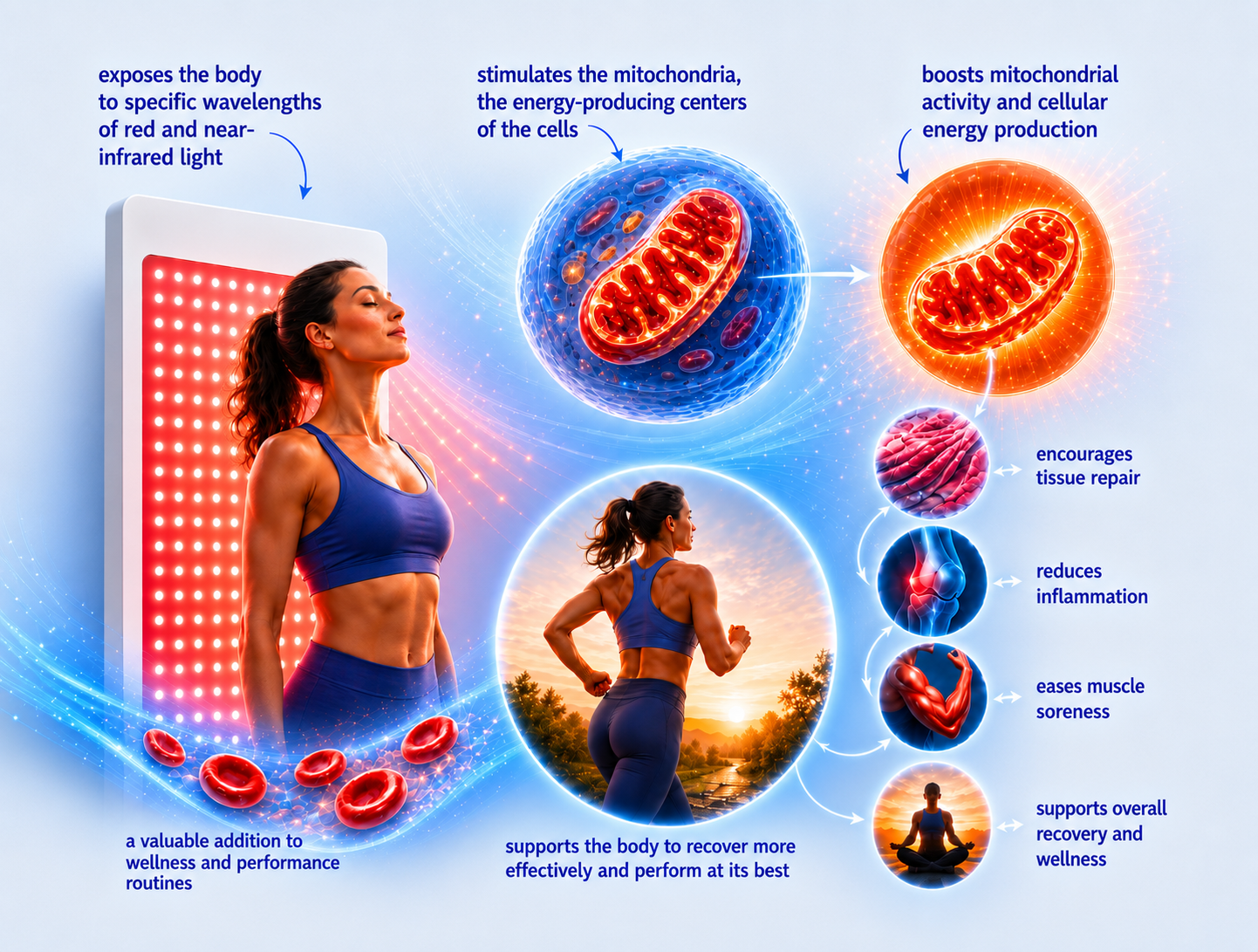
Red Light Therapy uses specific wavelengths of red and near-infrared light that penetrate the body's tissues. Within the mitochondria is an enzyme called cytochrome c oxidase, which absorbs this light and plays a key role in helping the mitochondria use oxygen to produce ATP. By supporting this natural process, Red Light Therapy helps promote healthy mitochondrial function, supporting normal cellular energy production and overall cellular function.
As the third stage of the protocol, Red Light Therapy supports the mitochondria in using the oxygen made available to the cells during EWOT to produce more ATP.

How Red Light Therapy Works
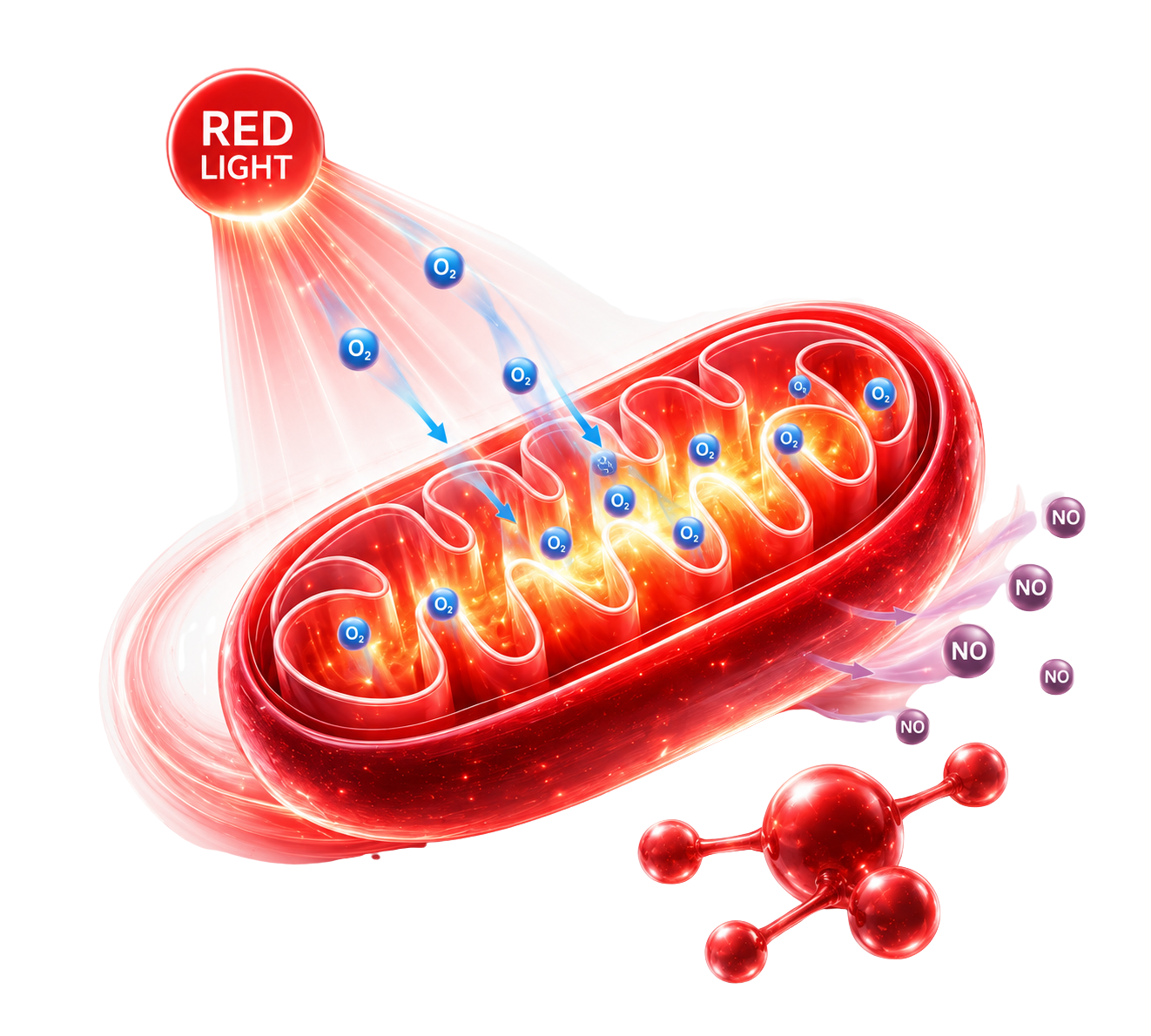
Red and near-infrared light penetrate the body's tissues and are absorbed by an enzyme within the mitochondria called cytochrome c oxidase. This enzyme plays an important role in helping the mitochondria use oxygen to produce ATP (adenosine triphosphate) — the energy that powers every cell in the body.
During periods of stress or inflammation, nitric oxide can bind to this enzyme, reducing the mitochondria's ability to use oxygen efficiently.
Red Light Therapy helps encourage nitric oxide to dissociate from the enzyme, allowing oxygen to be used more efficiently, supporting healthy ATP production.
With more ATP available, cells are better equipped to repair, regenerate, communicate, and carry out their normal functions.
Supporting Circulation and Nitric Oxide Release
Nitric oxide also plays an important role in healthy circulation. When released into the surrounding tissues and blood vessels, it helps the smooth muscle within blood vessel walls to relax, allowing the vessels to widen, supporting healthy blood flow.
Improved circulation may help deliver more oxygen and nutrients to tissues while also supporting the removal of metabolic waste products.
This is one reason Red Light Therapy complements PEMF and EWOT so effectively. PEMF helps prepare the cells, EWOT increases oxygen availability, and Red Light Therapy supports healthy mitochondrial function while also supporting nitric oxide-related pathways involved in healthy circulation.
Reducing Oxidative Stress and Free Radicals
Free radicals are unstable molecules produced naturally by the body. While they play an important role in normal cellular processes, excessive levels can contribute to oxidative stress, inflammation, fatigue, and slower recovery.
Red Light Therapy may help support the body's natural antioxidant defences, promoting a healthier balance between free radicals and antioxidants. By supporting healthy mitochondrial function, it may also help reduce oxidative stress, supporting recovery, skin health, and overall cellular resilience.
Red Light Therapy for Pain and Inflammation
Pain and inflammation are often signs that the body is under stress or responding to injury. Red Light Therapy may help by improving circulation, reducing oxidative stress, and supporting healthy inflammatory responses.
With more cellular energy available, the body is better equipped to support its natural repair processes. Many people use Red Light Therapy to help support muscle recovery, joint comfort, mobility, and everyday aches and pains.
Red Light Therapy Benefits
Frequently Asked Questions
Please disclose any medication that increases sensitivity to light, active skin concerns, eye conditions, or history of unusual reactions to light before treatment.
As a minimum, we recommend:
• Men: Shorts
• Women: Shorts with a vest top or sports bra
For full-body Red Light Therapy, you will be alone in a private room throughout the session. Your privacy and comfort will always be respected, and you will never be asked to remove more clothing than you are comfortable with.
A common starting approach may be two or three sessions per week for a short period, followed by less frequent maintenance sessions. Your schedule can be adjusted according to your goals, response, availability, and overall health.
You will be asked to complete a health questionnaire before your first session. Please disclose all relevant health conditions, medications, implanted devices, and recent medical procedures.
However, temporary responses can occur, including:
• Tiredness or relaxation
• Light-headedness
• Headache
• Muscle soreness
• Temporary changes in energy
• Skin warmth or mild redness
• Feeling thirsty after a session
Please tell your practitioner immediately if you feel uncomfortable at any stage.
At MitoPulse, our focus is not just on temporary relief — it is on supporting the body where energy, healing, and recovery truly begin - inside the cell.
By appointment only.
DunEden Business Centre, Business Centre, 8 Harrison Rd, Dundee DD2 3SN
Monday - Friday 800 - 1600